

English grammar can be confusing, especially when it comes to hyphenated words. One common question writers often ask is whether the correct spelling is “reevaluation” or “re-evaluation.” Both versions appear online, in books, and even in professional documents, which makes the choice even more confusing.
In modern American English, “reevaluation” without the hyphen is generally the preferred spelling. However, some writers still use “re-evaluation” for clarity, readability, or traditional style preferences. Understanding when to use a hyphen can improve your grammar, writing quality, and SEO performance.
This guide explains the difference between “reevaluation” and “re-evaluation,” the rules behind “re-” hyphenation, common mistakes to avoid, and what major dictionaries and style guides recommend. You’ll also learn practical examples, expert grammar tips, and best practices for professional and academic writing.
What Is Hyphenation and Why It’s Confusing
English grammar contains many spelling rules that confuse writers, and hyphenation is one of the biggest challenges. Words with prefixes often create uncertainty because some appear with hyphens while others do not.
One common example is “reevaluation” vs. “re-evaluation.” Both spellings appear online, in books, and even in professional writing. This leaves many writers wondering which version is correct in American English.
The short answer is that “reevaluation” without the hyphen is generally preferred in modern American English. However, there are situations where writers still choose “re-evaluation” for clarity or style.
Understanding how hyphenation works helps improve grammar, readability, SEO writing, and professional communication.
The Prefix “Re-”: What It Means and Why It Matters
The prefix “re-” means:
- Again
- Back
- Another time
It changes the meaning of the root word by showing repetition or renewal.
Examples include:
- Rewrite
- Rebuild
- Reconsider
- Reexamine
- Reevaluate
In American English, many “re-” words no longer use hyphens because modern writing trends favor closed compounds. (merriam-webster.com)
When to Use a Hyphen with “Re-”
Most “re-” words do not need a hyphen in modern American English. However, there are some exceptions.
Writers may use a hyphen when:
- Confusion could occur
- Two vowels create awkward readability
- The word looks unclear without separation
- Style guides recommend it
Examples:
| Without Hyphen | With Hyphen |
| Reevaluate | Re-enter |
| Rebuild | Re-elect |
| Reconsider | Re-examine |
The decision often depends on readability and style consistency.
Reevaluation vs. Re-evaluation: What Authorities Say
Most modern dictionaries and style guides prefer “reevaluation” as the standard American English spelling.
Major language references such as:
- Cambridge Dictionary
- Merriam-Webster
- Associated Press Stylebook
- Chicago Manual of Style
generally support the closed form unless clarity requires a hyphen. (dictionary.cambridge.org)
Some older publications still use “re-evaluation,” especially in formal or academic writing.
Reevaluation vs. Re-evaluation in American English
In modern American English:
- “Reevaluation” is more common
- “Re-evaluation” is less common but still accepted
Examples:
Correct modern usage:
- The company began a reevaluation of its policies.
- Students completed a reevaluation of the project.
Less common but acceptable:
- The committee requested a re-evaluation of the budget.
Search engine trends and publishing standards increasingly favor the closed version “reevaluation.”
Why Some Writers Still Use the Hyphen
Even though “reevaluation” is preferred today, many writers still choose the hyphenated form.
Reasons include:
- Visual clarity
- Personal style preference
- Traditional grammar habits
- Academic formatting
- Avoiding awkward letter combinations
Some people simply think “re-evaluation” looks easier to read because the repeated vowels stand out more clearly.
Common Errors and Corrections
Writers often make mistakes when using “re-” words.
Common Mistakes
| Incorrect | Correct |
| Re evaluation | Reevaluation |
| Re-Evaluation | Reevaluation |
| Reevaluateion | Reevaluation |
| Reevaluateing | Reevaluating |
Correct Sentence Examples
- The manager ordered a reevaluation of the proposal.
- We need to reevaluate the marketing strategy.
- Doctors requested a reevaluation of the patient’s condition.
Clarity Always Comes First
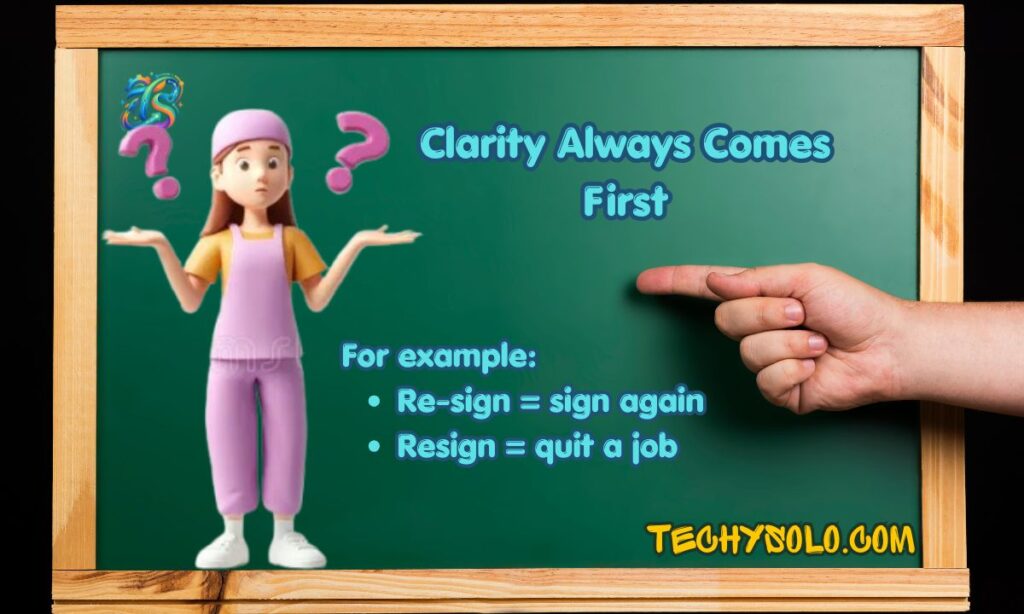
Grammar rules matter, but readability matters more.
If removing the hyphen creates confusion, adding one may improve understanding.
For example:
- Re-sign = sign again
- Resign = quit a job
Here, the hyphen changes meaning completely.
That is why many editors focus on reader clarity instead of rigid grammar rules alone.
Capitalization and Hyphenation in Titles
Title formatting can also affect hyphen use.
In title case:
- Re-Evaluation of Economic Trends
- Reevaluation of Economic Trends
Both styles may appear depending on publication guidelines.
Important Style Tips
- Follow one style consistently
- Avoid mixing forms in the same article
- Check your company or academic style guide
Consistency improves professionalism and SEO readability.
The Future of the Hyphen
English spelling constantly evolves. Over time, many hyphenated words become single words.
Examples include:
| Older Form | Modern Form |
| On-line | Online |
| To-day | Today |
The same trend affects “re-” words.
Language experts expect more hyphens to disappear in future American English writing.
Quick Reference Chart: “Re-” Hyphen Rules
| Word Type | Preferred Form |
| Standard modern usage | Reevaluation |
| Formal traditional style | Re-evaluation |
| Clarity needed | Use hyphen |
| SEO and digital writing | Reevaluation |
| Academic preference | Depends on style guide |
Best Practices for Using “Re-” Words
Follow these simple writing tips to avoid mistakes.
Use the Closed Form When Possible
Preferred examples:
- Reevaluate
- Reenter
- Reexamine
- Reinvest
Use a Hyphen for Clarity
Helpful examples:
- Re-sign
- Re-create
- Re-cover
Without hyphens, these words could confuse readers.
Stay Consistent
Do not switch between:
- Reevaluation
- Re-evaluation
Choose one style and use it throughout your content.
Check Style Guides
Professional writing may follow:
- AP Style
- Chicago Style
- MLA
- APA
Each guide may treat hyphenation slightly differently.
Reference: Cambridge Dictionary Definitions
Cambridge Dictionary lists “reevaluation” as the standard spelling in English. Hyphenated forms still appear occasionally, especially in older or highly formal writing contexts. (dictionary.cambridge.org)
Conclusion
The difference between “reevaluation” and “re-evaluation” mainly comes down to modern writing trends and readability preferences.
In current American English, “reevaluation” without the hyphen is usually the preferred spelling. It matches the broader movement toward simpler and more streamlined compound words.
However, “re-evaluation” is not technically wrong. Some writers still use it for clarity, style, or traditional formatting.
The best approach is simple:
- Use “reevaluation” in most modern writing
- Add a hyphen only when clarity truly matters
- Stay consistent throughout your content
Understanding hyphen rules helps writers create cleaner, more professional, and SEO-friendly content.
Frequently Asked Questions
Is reevaluation or re-evaluation correct?
Both are correct, but “reevaluation” is preferred in modern American English.
Why do some writers use “re-evaluation”?
Some writers use the hyphen for readability or traditional style preferences.
Does AP Style prefer reevaluation?
Yes, AP Style generally favors closed compound words without unnecessary hyphens.
Is “reevaluation” one word?
Yes. In modern American English, it is commonly written as one word.
When should I use a hyphen with “re-”?
Use a hyphen when it improves clarity or prevents confusion.
Is reevaluation better for SEO?
Usually yes, because modern search trends favor the non-hyphenated version.

Akash is a grammar expert at TechySolo, sharing simple, clear, and practical English tips to help learners improve writing and communication skills easily.