

Many English words sound similar but carry completely different meanings. “Distress” and “duress” are perfect examples. Because the words look alike and often appear in serious situations, many writers and English learners confuse them.
However, the meanings are very different. “Distress” usually refers to emotional, physical, or financial suffering, while “duress” refers to pressure, threats, or force used to make someone do something against their will.
Understanding the difference between distress and duress is important in everyday writing, legal communication, business English, and academic work. Using the wrong word can completely change the meaning of a sentence.
This guide explains the meanings, grammar, examples, common mistakes, and correct usage of both terms in simple and easy-to-understand language.
Distress vs Duress Quick Difference
Here is the simplest way to understand the difference:
| Word | Meaning | Common Usage |
| Distress | Pain, suffering, anxiety, hardship | Emotional, financial, physical situations |
| Duress | Pressure, threats, coercion | Legal or forced situations |
Quick example:
- She felt emotional distress after the accident.
- He signed the contract under duress.
Even though the words sound alike, their meanings are not interchangeable.
What Distress Means
“Distress” refers to suffering, pain, anxiety, or trouble. It can affect emotions, finances, health, or physical safety.
According to Cambridge Dictionary, distress means extreme worry, pain, or suffering.
Emotional distress
Emotional distress describes mental suffering or emotional pain.
Examples:
- The breakup caused severe emotional distress.
- Losing the job created stress and distress.
- The traumatic event left her in emotional distress.
This term often appears in psychology, counseling, and legal discussions.
Financial distress
Financial distress happens when a person or company struggles financially.
Examples:
- The business faced financial distress during the recession.
- Rising debt pushed the company into distress.
- Many families experienced financial distress after inflation increased.
In business writing, this phrase is very common.
Physical distress
Physical distress refers to bodily pain or danger.
Examples:
- The hiker showed signs of physical distress.
- The patient was breathing in distress.
- Emergency workers responded to the distress signal.
This usage often appears in healthcare and emergency situations.
What Duress Means
“Duress” means pressure, threats, force, or coercion used to make someone act against their will.
It is commonly associated with legal situations.
According to legal dictionaries, duress involves unlawful pressure or intimidation.
Duress in everyday language
In everyday English, duress describes situations where someone feels forced into action.
Examples:
- She agreed under duress.
- He confessed under duress from his employer.
- They acted under extreme duress.
The phrase “under duress” is the most common usage.
Duress in law
In legal contexts, duress can make agreements invalid if someone was forced or threatened.
Examples:
- The contract was signed under duress.
- The court examined claims of duress.
- The confession was dismissed because it occurred under duress.
Legal writing uses this word frequently.
The Key Difference Between Distress and Duress
The easiest way to separate these words is:
- Distress = suffering or pain
- Duress = force or pressure
Simple comparison
| Situation | Correct Word |
| Emotional suffering | Distress |
| Financial hardship | Distress |
| Forced agreement | Duress |
| Threats or coercion | Duress |
This distinction helps prevent grammar and vocabulary mistakes.
Using Distress in Sentences
Here are common sentence examples using “distress” correctly.
- The child was crying in distress.
- Financial distress forced the company to close.
- She experienced emotional distress after the accident.
- The rescue team answered the distress call.
- Many people struggle with psychological distress.
These examples show different types of suffering or hardship.
Using Duress in Sentences
Now look at correct “duress” examples.
- He signed the document under duress.
- The witness claimed she acted under duress.
- The suspect confessed under police duress.
- They accepted the terms under economic duress.
Notice that “under duress” appears frequently in legal and formal writing.
Why People Confuse Distress and Duress
Several factors cause confusion between these two words.
Similar sound
Both words sound similar when spoken quickly.
This causes many people to confuse pronunciation and spelling.
Similar spelling
The endings look alike:
- Distress
- Duress
Because of this, writers often mix them up while typing.
Both appear in serious situations
Both words usually appear in difficult or negative situations.
Examples include:
- Legal problems
- Emotional crises
- Financial hardship
- Pressure or danger
This overlap increases confusion.
Common Mistakes to Avoid
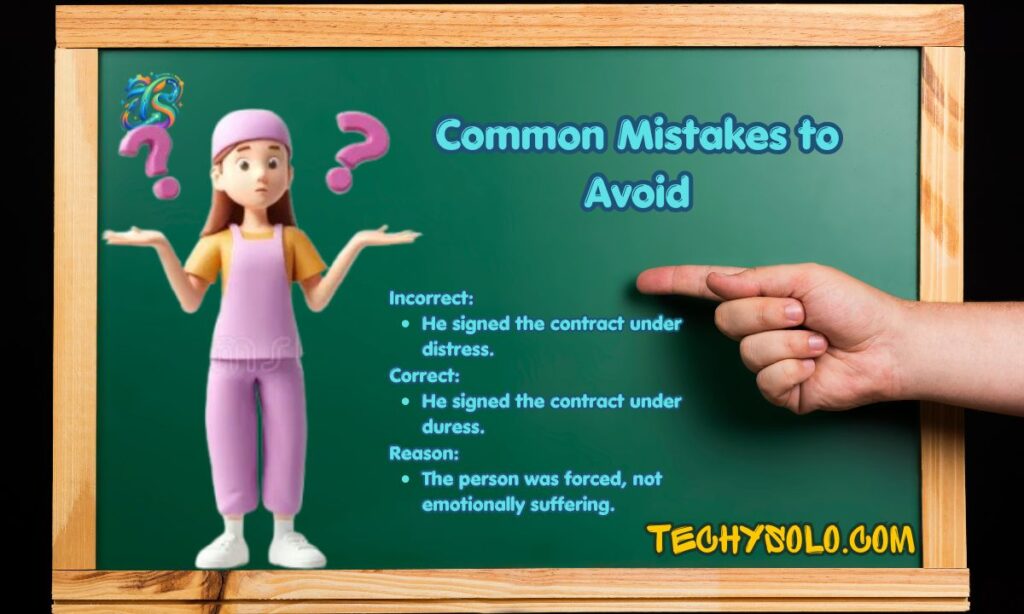
Understanding common errors helps improve grammar and vocabulary accuracy.
Using distress when duress is intended
Incorrect:
- He signed the contract under distress.
Correct:
- He signed the contract under duress.
Reason:
The person was forced, not emotionally suffering.
Using duress for emotional pain
Incorrect:
- She suffered severe duress after the breakup.
Correct:
- She suffered severe distress after the breakup.
Reason:
The sentence describes emotional pain, not coercion.
Misusing the phrase under duress
The phrase “under duress” specifically means:
- Under threat
- Under pressure
- Forced unwillingly
It should not describe sadness, anxiety, or emotional pain.
How to Remember the Difference
Simple memory tricks can help you remember these words correctly.
Distress = Discomfort
Both begin with “dis.”
Think:
- Distress = discomfort, pain, suffering
Duress = Forced
Think about:
- Pressure
- Threats
- Coercion
“Under duress” means forced into action.
Situations Where Both Words Appear
Sometimes both words appear in the same context but mean different things.
Example:
- The employee experienced emotional distress after being forced to resign under duress.
In this sentence:
- Distress = emotional suffering
- Duress = coercion or pressure
This example clearly shows the difference.
Reference Cambridge Dictionary Definitions
Cambridge Dictionary defines “distress” as extreme worry, pain, or suffering, while “duress” refers to force or threats used to make someone act unwillingly.
Conclusion
Although “distress” and “duress” sound similar, they describe very different situations.
Remember these simple definitions:
- Distress = emotional, physical, or financial suffering
- Duress = pressure, threats, or coercion
Using the correct word improves grammar, clarity, and professionalism in writing. This distinction is especially important in legal, academic, and business communication.
Whenever you feel unsure, ask yourself one question:
“Is the situation about suffering or force?”
- Suffering = distress
- Force = duress
That quick check will help you choose the correct word every time.
Frequently Asked Questions
What is the main difference between distress and duress?
Distress means suffering or pain, while duress means pressure or coercion.
Can “duress” mean emotional pain?
No. Duress refers to force or threats, not emotional suffering.
What does “under duress” mean?
It means someone acted because of pressure, threats, or coercion.
Is financial distress a correct phrase?
Yes. It describes serious financial hardship.
Why do people confuse distress and duress?
They sound similar, look similar, and appear in serious situations.
Is “duress” mainly a legal term?
Yes. It is commonly used in law and legal writing.

Akash is a grammar expert at TechySolo, sharing simple, clear, and practical English tips to help learners improve writing and communication skills easily.