

Many English words look similar but carry completely different meanings. One common example is “dieing” vs “dying.” At first glance, both spellings may appear correct. However, only one works in most everyday writing.
People often confuse these words because English spelling rules can feel inconsistent. The good news is that the difference is actually simple once you understand the grammar rule behind it.
This guide explains the meaning, grammar, usage, and spelling difference between “dieing” and “dying” with clear examples and easy explanations.
According to dictionaries and grammar experts, “dying” is the correct present participle of the verb “die.” Meanwhile, “dieing” exists only in rare technical situations related to manufacturing.
The Root Verb: What “Die” Really Means
The verb “die” means:
- To stop living
- To fade away
- To stop functioning
- To disappear gradually
Examples:
- Plants die without water.
- Old traditions sometimes die out.
- The engine died suddenly.
The word can describe literal death, emotional exhaustion, or gradual disappearance.
How “Die” Expands in Meaning
English speakers use “die” in both literal and figurative ways.
Common meanings include:
- Physical death
- Emotional reactions
- Strong desire
- Gradual fading
Examples:
- The patient is dying.
- The music is dying away.
- I’m dying to know the answer.
Because the word is used so often, spelling mistakes happen frequently.
Why “Dying” Is the Correct Present Participle
The correct continuous form of “die” is “dying,” not “dieing.”
Examples:
- The flowers are dying.
- He is dying slowly.
- Several languages are dying out.
English grammar changes certain verbs ending in “ie” before adding “-ing.” Instead of keeping the “ie,” the spelling changes to “y.”
die→dyingdie \rightarrow dyingdie→dying
This spelling rule also applies to other verbs.
The Rule That Governs It
When a verb ends in “ie”:
- Remove “ie”
- Add “y”
- Then add “-ing”
Formula:
ie+ing→y+ingie + ing \rightarrow y + ingie+ing→y+ing
This explains why:
- die → dying
- lie → lying
- tie → tying
The spelling “dieing” breaks the standard grammar rule.
Clear Examples of the Same Pattern
| Base Verb | Correct -ing Form |
| Die | Dying |
| Lie | Lying |
| Tie | Tying |
Incorrect forms would be:
- Lieing
- Tieing
- Dieing
Why “Dieing” Looks Right to So Many People

Many writers assume every verb simply adds “-ing.”
For example:
- Walk → walking
- Jump → jumping
- Read → reading
So naturally, people think:
- Die → dieing
But English contains several irregular spelling rules, and this is one of them.
Sound-Based Assumptions
The confusion also happens because “dieing” and “dying” sound almost identical when spoken aloud.
Writers often type words based on pronunciation instead of spelling rules. Autocorrect mistakes and fast typing also contribute to the problem.
Is “Dieing” Ever a Real Word? Yes But Rarely
Surprisingly, “dieing” can technically be correct in specialized industries.
However, this usage is extremely uncommon in normal writing.
Is dieing a word?
Yes, but only in technical manufacturing contexts involving a “die” machine or cutting tool.
Die as a Noun, Not a Verb
A “die” can also be a noun.
In manufacturing, a die is:
- A cutting tool
- A stamping mold
- A shaping machine component
When workers use such equipment, the process may be called “dieing.”
Where You’ll See This Usage
Rare industrial examples include:
- Metal stamping
- Die-cutting
- Coin production
- Factory manufacturing
Example:
- The steel sheets are dieing under pressure.
Outside technical industries, most people never need this spelling.
Side by Side Comparison: Dieing vs Dying
Comparison Table
| Feature | Dying | Dieing |
| Meaning | Approaching death or fading | Using a die tool |
| Common Usage | Very common | Extremely rare |
| Grammar Status | Correct standard spelling | Technical term only |
| Used in Daily English | Yes | Almost never |
| Related To | Verb “die” | Noun “die” |
Real Examples That Clarify the Difference Instantly
Correct Everyday Uses of “Dying”
- The flowers are dying.
- The fire is dying out.
- She is dying to meet him.
- The patient is dying peacefully.
Correct Industrial Uses of “Dieing”
- The factory specializes in dieing steel plates.
- The machine is dieing metal components.
Figurative and Emotional Power of “Dying”
The word “dying” is also powerful emotionally and figuratively.
It can describe:
- Fading traditions
- Weakening sounds
- Strong emotions
- Extreme excitement
Common Figurative Uses
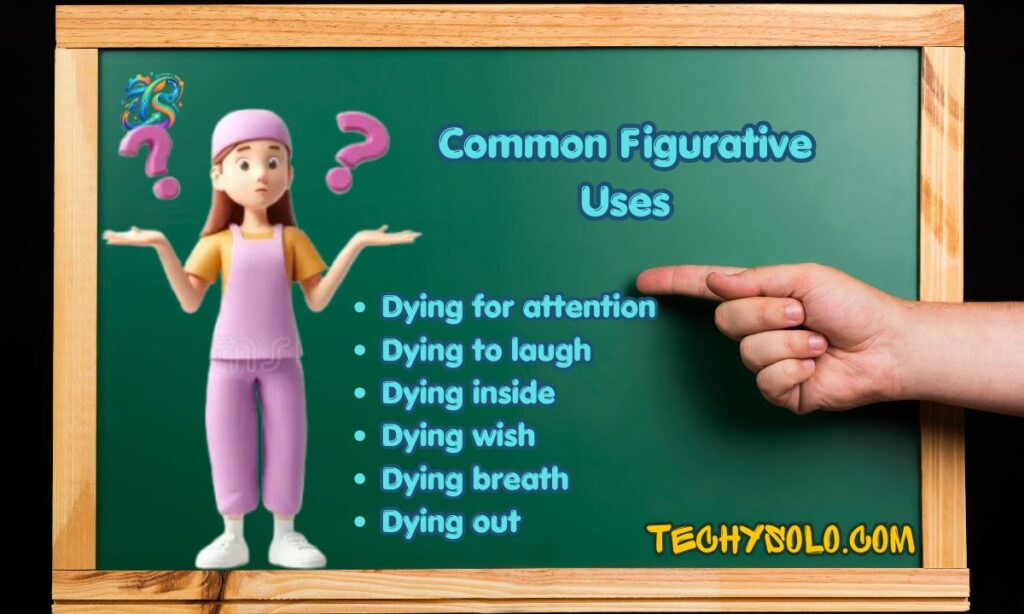
- Dying for attention
- Dying to laugh
- Dying inside
- Dying wish
- Dying breath
- Dying out
These phrases always use “dying,” never “dieing.”
Dying vs Dead: Understanding the Difference
Many learners also confuse “dying” and “dead.”
Key Distinction
| Word | Meaning |
| Dying | Still alive but approaching death |
| Dead | No longer alive |
Examples:
- The animal is dying.
- The animal is dead.
“Dying” describes a process. “Dead” describes a final state.
Why This Mistake Persists in Modern Writing
This spelling error continues because English spelling rules are not always predictable.
Common Causes
- Sound-based spelling
- Fast typing
- Autocorrect issues
- Lack of grammar awareness
- Confusion with regular verbs
Even experienced writers sometimes make this mistake.
Simple Ways to Never Get This Wrong Again
You can avoid this mistake with a few easy tricks.
The One Question Test
Ask yourself:
“Am I talking about death or fading away?”
If yes, the answer is almost always “dying.”
The Substitution Trick
Replace the word with another “ie” verb.
Example:
- tie → tying
- lie → lying
So naturally:
- die → dying
Editing Checklist for Writers and Editors
Before publishing content, check for spelling accuracy.
High Risk Areas
- Blog posts
- Academic essays
- Social media captions
- Medical writing
- Emotional storytelling
Final Check
If your sentence is not about factory machinery or metal shaping, use “dying.”
Dieing vs Dying in Professional and Academic Writing
Correct spelling matters in professional communication.
Grammar mistakes can reduce credibility and make writing appear careless.
Academic editors and employers usually expect proper spelling in:
- Research papers
- Business emails
- Website content
- Educational materials
Why This Error Hurts Credibility

Using “dieing” incorrectly may:
- Confuse readers
- Hurt SEO performance
- Lower trust
- Make content look unprofessional
Writers who understand grammar details often create stronger and more authoritative content.
Quick Recap: Dieing vs Dying
- “Dying” is the correct spelling for the verb “die”
- “Dieing” is only used in rare technical industries
- English changes “ie” to “y” before adding “-ing”
- Most writers should always use “dying”
Reference: Cambridge Dictionary Definitions
Cambridge and major dictionaries recognize “dying” as the standard present participle of “die.” Technical references occasionally mention “dieing” in manufacturing-related contexts.
Conclusion
The difference between “dieing” and “dying” comes down to grammar and context. In almost every situation, “dying” is the correct spelling because it follows the standard English rule for verbs ending in “ie.”
Meanwhile, “dieing” belongs to specialized manufacturing language and rarely appears in everyday communication.
Once you remember the simple “ie to y” spelling rule, choosing the correct word becomes much easier.
Frequently Asked Questions
Is “dieing” grammatically correct?
Only in rare technical manufacturing contexts. In normal English, “dying” is correct.
Why is it spelled “dying” instead of “dieing”?
English changes “ie” to “y” before adding “-ing.”
Is “dieing” a real word?
Yes, but it relates to industrial die-cutting processes.
Which spelling should I use in normal writing?
Use “dying.”
Is “dying” used figuratively?
Yes. Example: “I’m dying to know.”
Do British and American English use different spellings?
No. Both use “dying.”

Akash is a grammar expert at TechySolo, sharing simple, clear, and practical English tips to help learners improve writing and communication skills easily.