

English contains many word pairs that seem interchangeable but have subtle differences in usage. One such pair is unenroll and disenroll. Both terms generally mean removing someone from a course, program, membership, or enrollment list. However, writers, students, educators, and professionals often wonder which spelling is more appropriate.
If you’ve ever searched “disenroll or unenroll”, you’re not alone. Understanding the difference can help improve your writing accuracy, especially in educational, administrative, and professional settings.
This guide explains the meanings, usage rules, origins, pronunciation, Google Trends insights, and practical examples of both words.
Disenroll or Unenroll – Quick Answer
Both unenroll and disenroll are correct English words.
Quick Comparison
| Word | Meaning | Common Usage |
| Unenroll | Remove from enrollment | More common in modern education systems |
| Disenroll | Remove from enrollment | Common in official, administrative, and legal contexts |
Key Takeaway
In most situations, unenroll is slightly more common in everyday American English, while disenroll often appears in formal administrative language.
Define Unenroll
Unenroll means to remove someone from a course, program, class, service, membership, or enrollment system.
Definition
“To cancel or end enrollment in an organization, program, course, or service.”
Examples
- I decided to unenroll from the online course.
- Students may unenroll before the registration deadline.
- She unenrolled from the training program.
Common Contexts
- Schools
- Colleges
- Online courses
- Membership programs
- Subscription-based learning platforms
Define Disenroll
Disenroll also means removing someone from an enrolled status.
Definition
“To officially remove or withdraw a person from enrollment.”
Examples
- The university may disenroll students who fail to meet requirements.
- Participants were disenrolled from the study.
- The insurance company disenrolled inactive members.
Common Contexts
- Government programs
- Insurance plans
- Healthcare systems
- Administrative records
- Legal documentation
How to Properly Use Unenroll and Disenroll in a Sentence
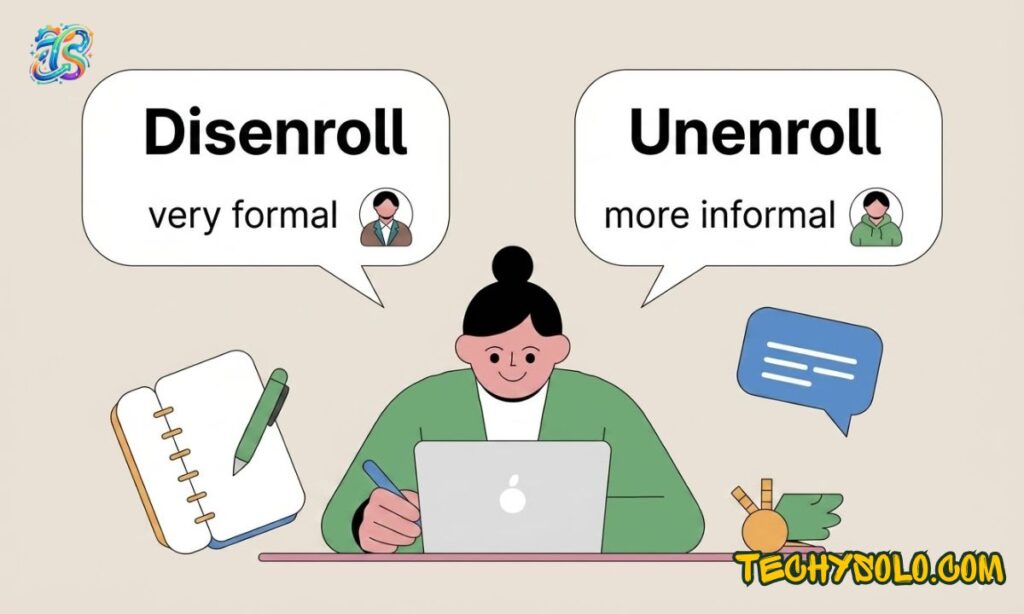
The two words often function similarly.
Using Unenroll
Examples:
- I need to unenroll from the course before Friday.
- Parents can unenroll students through the online portal.
- You may unenroll at any time.
Using Disenroll
Examples:
- The agency may disenroll members who no longer qualify.
- Students were disenrolled due to policy violations.
- The institution automatically disenrolled inactive participants.
Quick Rule
Use unenroll when discussing voluntary withdrawal.
Use disenroll when discussing formal or administrative removal.
More Examples Of Unenroll & Disenroll Used In Sentences
Unenroll Examples
- She chose to unenroll from the language class.
- Users can unenroll from email courses.
- He unenrolled after changing career paths.
- We unenrolled before the semester began.
- The platform allows members to unenroll easily.
Disenroll Examples
- Several members were disenrolled from the healthcare plan.
- The school disenrolled students who did not register.
- Participants were formally disenrolled.
- The organization may disenroll inactive members.
- Failure to comply may result in disenrollment.
Common Mistakes To Avoid
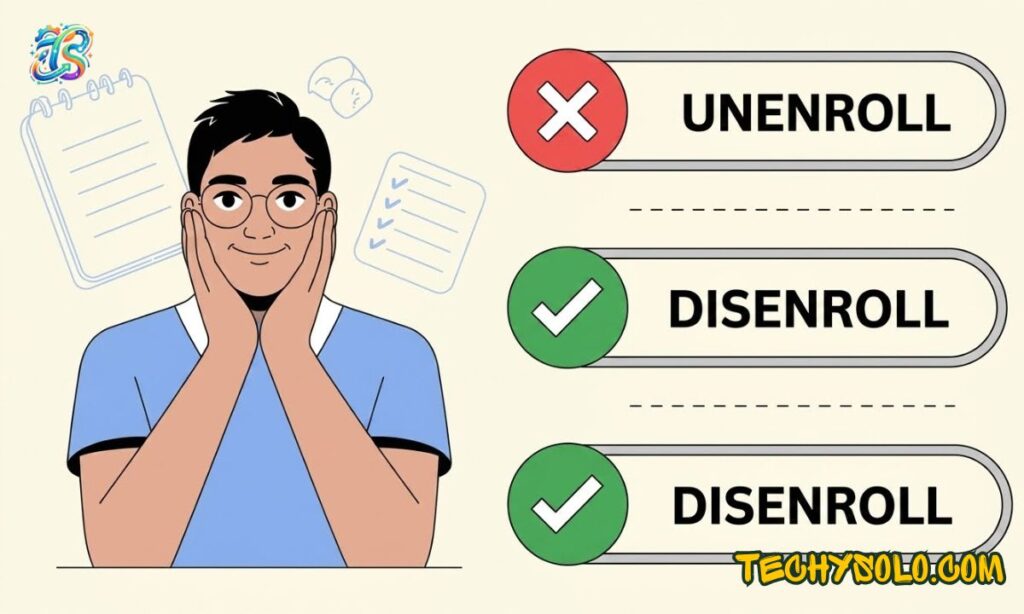
Many writers misuse these terms.
Mistake 1: Assuming One Is Incorrect
Incorrect:
Only unenroll is a real word.
Correct:
Both unenroll and disenroll are accepted English terms.
Mistake 2: Mixing Styles
Avoid switching between terms within the same document unless necessary.
Mistake 3: Ignoring Context
Administrative documents often favor disenroll.
Educational websites frequently prefer unenroll.
Mistake 4: Using Them as Different Actions
Both refer to ending enrollment, though their contexts may differ.
Context Matters
The best choice depends on the audience and purpose.
Educational Context
Usually:
- Unenroll
- Unenrollment
Example:
“Students may unenroll before the deadline.”
Administrative Context
Usually:
- Disenroll
- Disenrollment
Example:
“Members may be disenrolled for noncompliance.”
Healthcare Context
Healthcare organizations often use disenroll.
Example:
“The patient was disenrolled from the plan.”
Exceptions To The Rules
Language usage is not always consistent.
Some universities use:
- Unenroll
Others use:
- Disenroll
Similarly, software platforms may choose either term based on internal style guides.
Important Note
Always follow the terminology used by the organization or institution you’re writing for.
Practice Exercises
Exercise 1
Choose the best word:
“The student decided to _____ from the online course.”
Answer: unenroll
Exercise 2
Choose the best word:
“The insurance company may _____ inactive members.”
Answer: disenroll
Exercise 3
Choose the best word:
“Users can _____ at any time.”
Answer: unenroll
Exercise 4
Choose the best word:
“Participants were officially _____ from the program.”
Answer: disenrolled
The Origin of Disenroll or Unenroll
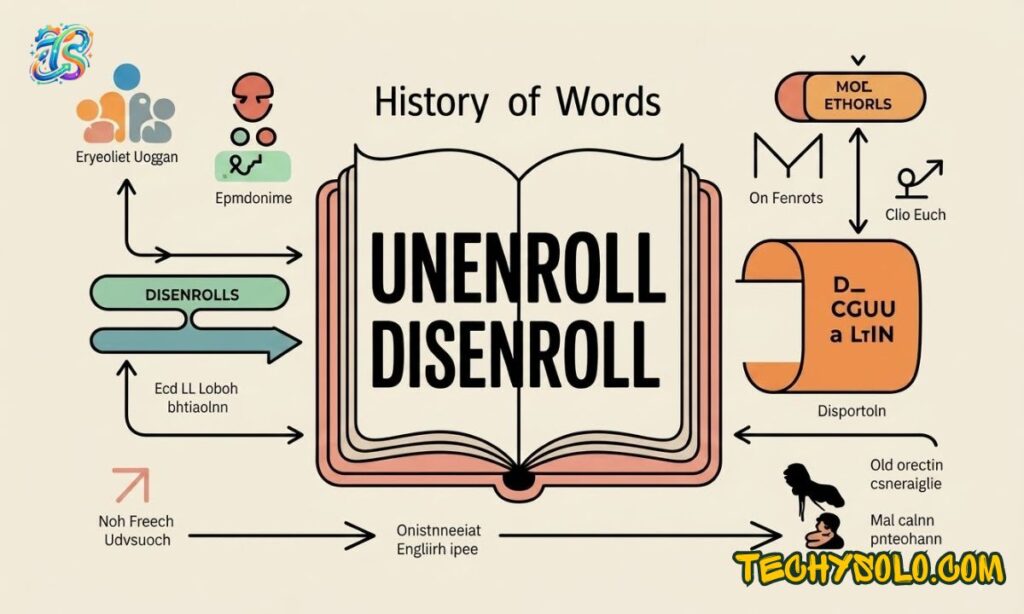
Both words derive from the verb enroll.
Root Word
Enroll comes from:
- Old French enroller
- Meaning: to enter on a list or register
Prefix Development
As English evolved, prefixes were added to indicate reversal.
Examples:
| Prefix | Meaning |
| Un- | Reverse an action |
| Dis- | Remove or separate |
Both created valid words that describe ending enrollment.
British English vs American English Spelling
Unlike many English spelling differences, this distinction is not strongly divided by country.
American English
More likely to use:
- Unenroll
- Unenrollment
British English
Often prefers:
- Withdraw
- Remove from enrollment
However, both unenroll and disenroll are understood internationally.
When Should You Use “Unenroll”?
Use unenroll when:
- A student voluntarily leaves a course.
- Someone cancels participation.
- Discussing online learning platforms.
- Writing informal or educational content.
Example
“I unenrolled from the certification course last week.”
When Is “Disenroll” Appropriate?
Use disenroll when:
- Referring to official removal.
- Writing administrative documents.
- Discussing insurance programs.
- Referring to compliance-related actions.
Example
“The agency disenrolled individuals who no longer qualified.”
Pronunciation Guide for Disenroll and Unenroll
| Word | Pronunciation |
| Unenroll | un-en-ROLL |
| Disenroll | dis-en-ROLL |
Pronunciation Tips
- Stress the final syllable.
- Both words rhyme with “patrol.”
Prefix Deep Dive: Un- vs Dis-
Understanding prefixes helps explain the difference.
Un-
Usually means:
- Reverse
- Undo
- Remove
Examples:
- Unlock
- Untie
- Unplug
Dis-
Usually means:
- Separate
- Remove
- Negate
Examples:
- Disconnect
- Disqualify
- Disapprove
Application to Enrollment
| Prefix | Interpretation |
| Unenroll | Undo enrollment |
| Disenroll | Remove from enrollment |
This subtle distinction influences usage preferences.
Disenroll or Unenroll – Google Trends & Usage Data
Recent language usage patterns suggest:
- Unenroll appears frequently on educational websites.
- Disenroll is common in healthcare and government documentation.
- Search volume for both terms continues to grow due to online learning.
Usage Trend Insights
- Online courses favor “unenroll.”
- Insurance providers favor “disenroll.”
- Search engines recognize both terms as valid.
Key Observation
Neither term is universally superior. Context remains the deciding factor.
Conclusion
The debate between unenroll vs disenroll comes down to context rather than correctness. Both words mean removing someone from an enrolled status, and both are accepted in modern English.
Generally, unenroll is more common for voluntary withdrawal from courses, memberships, and online programs, while disenroll often appears in formal administrative, healthcare, insurance, and legal settings. Understanding the audience, industry, and communication purpose will help you choose the most appropriate term.
Frequently Asked Questions
Is unenroll a real word?
Yes, unenroll is a recognized English word meaning to cancel or remove enrollment.
Is disenroll a real word?
Yes, disenroll is also a valid English word commonly used in formal and administrative contexts.
Which is more common, unenroll or disenroll?
Unenroll is generally more common in education, while disenroll is more common in healthcare and government documentation.
Do unenroll and disenroll mean the same thing?
Yes, both refer to ending enrollment, though usage contexts may differ.
Is unenroll used in American English?
Yes, unenroll is widely used in American educational and online-learning contexts.
When should I use disenroll?
Use disenroll when discussing formal removal from programs, plans, or official records.
Can I use either word in everyday writing?
Yes, both are acceptable, but choosing the term that matches the context sounds more natural.

Akash is a grammar expert at TechySolo, sharing simple, clear, and practical English tips to help learners improve writing and communication skills easily.